
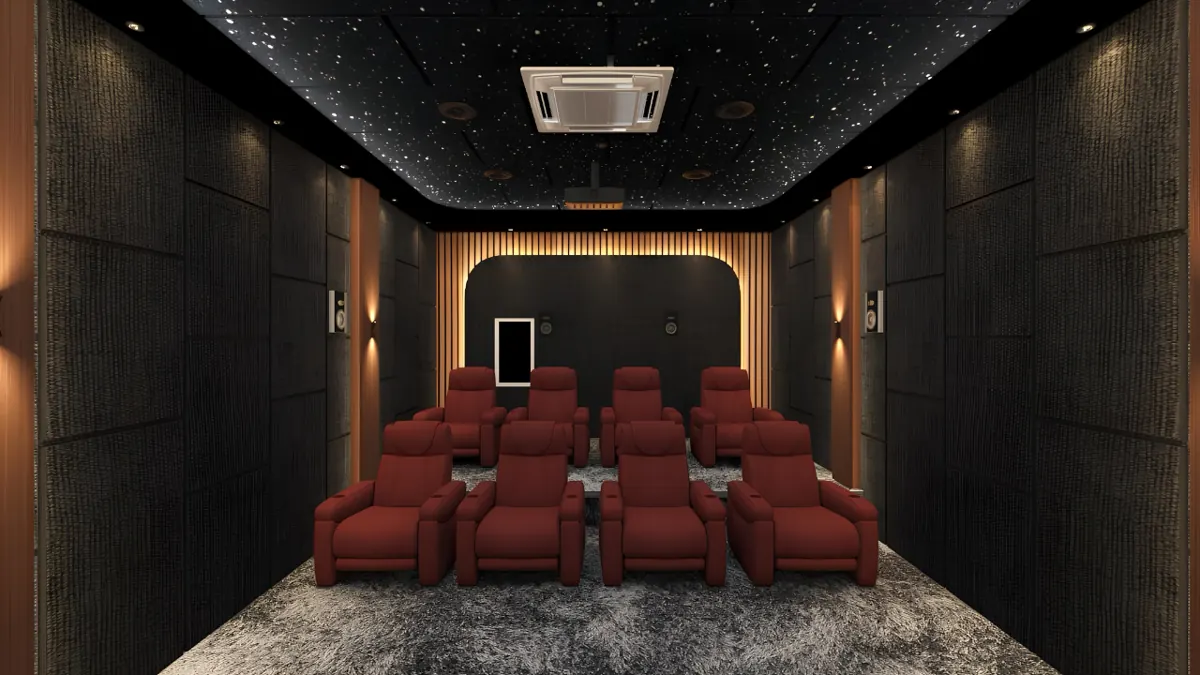
Projector vs TV for home is a simple question with a surprisingly long answer, because the right choice depends on your room, your light, your budget and how you like to watch. This complete guide answers what is better for a home theater, TV or projector, and covers HD projector vs TV, projector TV vs TV, projector life vs TV, projector vs TV cost, home theater vs TV and TV vs projector for living room in clear, simple language.
The short answer: projector vs TV for home
If you watch mostly in the evening, can darken the room and want a big, cinema-style picture, a projector is usually better. If you watch in daylight, want a simple setup and use the screen for news, sports, gaming and kids’ shows, a TV is usually better. For a dedicated home theatre room, a projector is the classic choice. For a normal living room, a TV is the safer choice. The rest of this guide explains exactly why, so you can decide with confidence.
Projector vs TV comparison table
| Question | Projector | TV |
|---|---|---|
| Maximum picture size | 100 to 150 inches or more | Usually 55 to 85 inches; 98 inches and above costs a lot |
| Bright room | Weak unless very bright, ALR screen | Excellent |
| Dark room | Excellent, cinema feel | Very good |
| Setup effort | Mount, screen, wiring, calibration | Wall mount or stand |
| Built-in sound | Weak | Average |
| Gaming lag | Higher on many models | Lower, better for competitive play |
| Cost per inch at very large sizes | Lower | Higher |
| Light source life | Lamp 2,000 to 6,000 h; LED or laser 20,000 to 30,000 h | About 50,000 h or more |
Use this table as a quick check, then read the sections below that match your situation.
What is better for home theater, TV or projector
For a proper home theater, a projector is usually better because a home theater is a dark, controlled room built around a very large screen and surround sound. A projector can give a 120-inch picture that makes a film feel like a cinema. However, a premium OLED or large QLED TV can also be a great theater room screen when the room is small, when you want the best black levels with no screen setup, or when family members watch during the day.
The best answer is: choose a projector if the room is dark and you want size; choose a TV if you want brightness, ease and low maintenance. If you are building a dedicated room, speak to specialists about custom home theatre in Bangalore.
Home theater vs TV: what is the real difference
Home theater vs TV is not only about the screen. A home theater is a whole system: a large display (usually a projector and screen), a surround sound system, comfortable seating, acoustic treatment and controlled lighting. A TV on its own is just a display. You can put a TV in a home theater room, and you can also add surround sound to a TV in a living room, but the full cinema feeling comes from combining all parts.
If you only want better movie nights in your living room, upgrade the TV, add a soundbar or speakers and control the light. If you want a private cinema, plan a theatre room. See home theatre setup cost in Bangalore for budgets.
HD projector vs TV
An HD projector (full HD or 4K) paired with a good screen can create a picture of 100 inches or more that most TVs cannot match at a similar price. In a dark room, colours and contrast look cinematic. A TV, however, is brighter, sharper at small sizes and needs no screen. At 55 to 75 inches, a TV is almost always the better value. At 100 inches and above, an HD or 4K projector is the better value.
Resolution matters less than people think on medium screens: full HD is fine for most films at 80 to 100 inches from the right distance, while 4K shows its benefit on very large screens or when you sit close. For a deeper comparison, read HD projector vs TV.
Projector TV vs TV
A projector TV (also called laser TV or ultra short-throw projector) sits close to the wall and throws a very large picture upward. It includes a tuner, speakers and smart apps, so it behaves like a TV. Compared with a normal TV, a projector TV gives a much bigger picture for the money and looks stylish without a ceiling mount. A normal TV is brighter in daylight, easier to place and usually has lower input lag for gaming.
If you want a big screen in the living room without building a theatre, a laser projector TV with an ambient-light-rejecting screen is worth considering. If your living room is bright all day, a QLED or OLED TV is a safer choice. Read projector TV vs TV for short-throw, laser and LED options.
Projector life vs TV life
People often ask about projector life vs TV before they buy. Lamp projectors are usually rated at about 2,000 to 6,000 hours, which means a lamp change every few years with regular use. LED and laser projectors are typically rated at 20,000 to 30,000 hours, while LED and QLED TVs are rated at 50,000 hours or more, and OLED TVs vary by model and use.
At four hours a day (about 1,460 hours a year), a 4,000-hour lamp lasts roughly 2.7 years, while a 25,000-hour laser source lasts around 17 years. In real life, electronics also age because of heat, dust and power surges, so rated hours are only a guide. Full details are in projector life vs TV life.
Project vs TV: what people really mean
Many people type "project vs TV" in Google when they mean projector vs TV. The answer is the same: choose a projector for a large screen in a dark room and a TV for bright rooms and everyday ease. If you are making this choice now, our 8 questions to ask before choosing projector vs TV will help you decide in a few minutes.
Projector vs TV cost
The projector vs TV cost comparison depends on the size you want. As rough market ranges, a 55 to 65-inch 4K TV may cost about ₹40,000 to ₹1.5 lakh, a 75 to 85-inch TV about ₹80,000 to ₹4 lakh, and a home projector about ₹40,000 to ₹3 lakh, with laser or ultra short-throw projector TVs costing more. Prices change often, so always check current offers.
Remember the extras. A projector needs a screen, a ceiling mount, cables and usually a better sound system. A TV needs a mount or stand and a soundbar. Compare the complete package and divide by the screen size to find the cost per inch. Read projector vs TV cost for a full breakdown including running costs and repairs.
TV vs projector for living room
For a living room, a TV is usually the better choice because living rooms have windows, lights and daytime use. A good QLED or OLED TV looks excellent in any light and is simple to use for news, kids’ shows, sports and streaming. A projector in a living room works best when you can close curtains at night and use a proper screen, especially an ALR screen that rejects ambient light.
A clever approach is a hybrid: keep a TV for daily use and use a retractable screen with a projector for weekend movies. See living room and home theatre combos.
Theater room TV vs projector
In a dedicated theater room, a projector is the traditional and often best choice. The room is dark, the seating is arranged for a large screen and the surround system fills the space. A TV can work in a smaller theatre, particularly an OLED with deep blacks, and avoids screen, mount and calibration work.
- Choose a projector for rooms of about 12 × 16 feet or larger with 4 or more recliners.
- Choose a TV for compact rooms with 2 to 4 seats, or when you will use the room in daylight.
Plan seats and screen together using home theatre seating dimensions and room size and seating layout.
Picture quality: contrast, brightness and colour
TVs, especially OLEDs, offer deep blacks and strong contrast. Good projectors offer cinematic scale and natural colours, but black levels depend on the room and screen. TVs are brighter, which helps with HDR content in daylight. Projectors reach their best when light is controlled. If picture quality in a dark room matters most, both can impress, so the decision is about size and light.
Sound: do not forget the speakers
Neither projectors nor TVs sound great on their own. Projector speakers are usually weak, and TV speakers are thin. For a real home theater, plan an AV receiver, front, surround and height speakers and a subwoofer. In a living room, a good soundbar or a 5.1 system makes a huge difference. Read about Dolby Atmos speaker layout and home theatre acoustics.
Space, installation and room needs
A TV needs a wall mount or a stand. A projector needs a ceiling mount or shelf at the right throw distance, a screen, concealed cabling and sometimes ventilation. In a new home, plan these before the false ceiling and wall finishing. A professional installer also calibrates colour, focus and keystone for the best result. See home theatre room design.
Gaming, sports and kids
For competitive gaming, TVs usually have lower input lag and faster response. For sports with family or friends, a big projector screen creates a stadium feel in a dark room, while a TV works better in daylight matches. For kids, TVs are simpler and more robust, and projectors need care to avoid bumping the mount or looking into the lens.
Eye comfort, heat and noise
Very large bright screens in a dark room can tire the eyes if the room has no background lighting, so keep a soft light behind the screen. Projectors produce fan noise and heat, so choose a quiet model and keep vents clear. TVs are generally silent. Both are safe when used sensibly and at the right distance.
Which to choose: quick scenarios
- Dedicated theatre, evening use: projector with a good screen.
- Bright living room, daily family use: QLED or OLED TV.
- Living room with a big-screen wish: laser projector TV with ALR screen, or a very large TV.
- Gaming focus: TV.
- Tight budget, small room: TV.
- Budget for a 100-inch picture: projector.
Mistakes to avoid when choosing
- Buying a projector for a bright room without light control.
- Choosing a TV that is too small for the seating distance.
- Ignoring the screen, mount and wiring cost of a projector.
- Forgetting sound and acoustics.
- Comparing only the price tag instead of the complete package.
Read more in home theatre mistakes to avoid.
Build your home theatre with Infinity Homes Solution
We help Bangalore families choose between a projector and a TV, then plan the room, seating, acoustics and installation. Explore custom home theatre in Bangalore, the acoustics, seating and projector guide and our home theatre service from design to installation, or contact us for advice.
Frequently asked questions
Is a projector better than a TV for home?
It depends on the room. A projector is better for a large picture in a dark room, while a TV is better for bright rooms and everyday use.
What is better for home theater, TV or projector?
A projector is usually better for a dedicated, dark home theater, and a TV is better for bright or small rooms. Combine the screen with good speakers and acoustics.
Is HD projector vs TV a close choice?
At 55 to 75 inches a TV usually wins on value and brightness. At 100 inches and above an HD or 4K projector usually wins.
What is the difference between a projector TV and a normal TV?
A projector TV is an ultra short-throw laser projector that gives a huge picture from near the wall. A normal TV is a flat panel with its own display.
How long does a projector last compared with a TV?
Lamp projectors last about 2,000 to 6,000 hours, LED or laser projectors about 20,000 to 30,000 hours, and TVs about 50,000 hours or more, depending on use and care.
Is project vs TV the same as projector vs TV?
Yes. People often search "project vs TV" but mean projector vs TV.
Which costs more, a projector or a TV?
For small and medium sizes a TV is cheaper. For very large sizes a projector setup is usually cheaper per inch.
Is a projector good for a living room?
Yes if you can control the light and use a suitable screen. For bright living rooms a TV is the safer choice.