
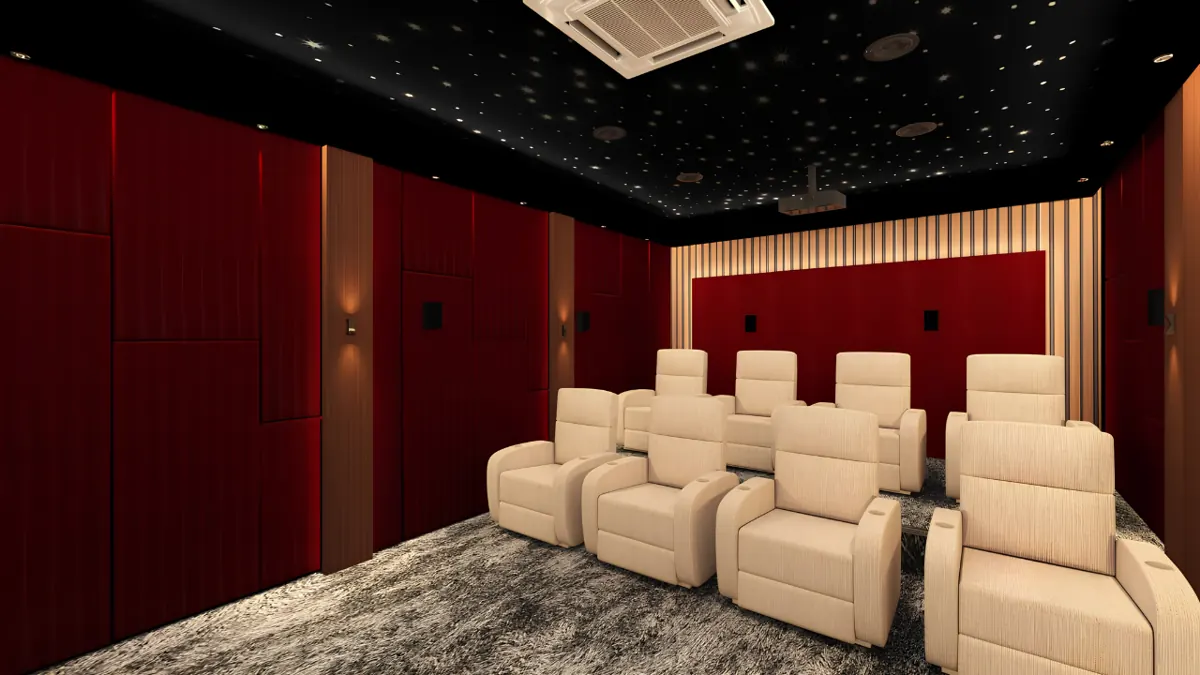
Two different problems hide inside home theatre acoustics: how the room sounds inside, and how much sound escapes outside. Treating one does not fix the other. Understanding the difference saves money and helps you build a theatre that sounds great without upsetting the neighbours.
Absorption vs isolation
Acoustic treatment (absorption and diffusion) controls reflections inside the room, which improves clarity and dialogue. Soundproofing (isolation) stops sound from passing through walls, floors and ceilings. Foam or fabric panels help the first, but they do very little for the second. Heavy, sealed and decoupled construction is what blocks sound.
Controlling the sound inside the room
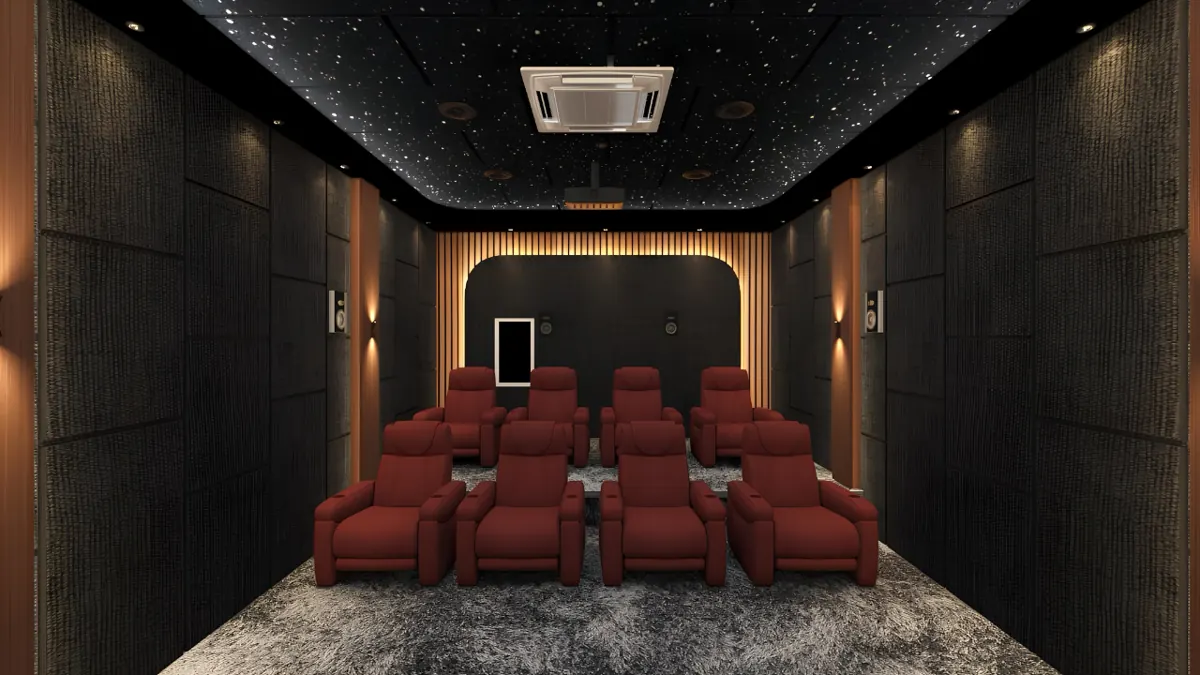
Hard, parallel surfaces cause echo and flutter. Fix this with absorption panels at first reflection points, ceiling treatment, thick carpet and soft furnishings such as curtains and upholstered recliners. Bass is harder: corner bass traps and good subwoofer placement keep low notes tight instead of boomy. Panels can be wrapped in fabric, leather or wood-slat finishes so they double as décor.
Keeping sound from leaking out
Isolation depends on mass, airtightness and decoupling. Common measures include double-layer drywall with sound-damping compound, sealed gaps and sockets, solid-core doors with seals, and a floating ceiling where the structure allows. Even tiny gaps leak sound, so sealing matters as much as thickness.
Home theatres in Bangalore apartments
In an apartment, shared walls, ceilings and floors mean neighbours are close. Choose the room furthest from neighbouring bedrooms, avoid placing subwoofers against shared walls, and plan isolation from the start. Check your apartment association's rules on renovation work and timings before starting. Walk the neighbours through the plan; a courtesy conversation avoids conflict later.
Villas have more freedom
In an independent villa you often have more control over wall thickness, basement or terrace-level rooms, and distance from neighbours. A dedicated room built with proper isolation can be played loud without disturbing anyone. This is where a customized home theatre design pays off most.
Doors, windows and AC
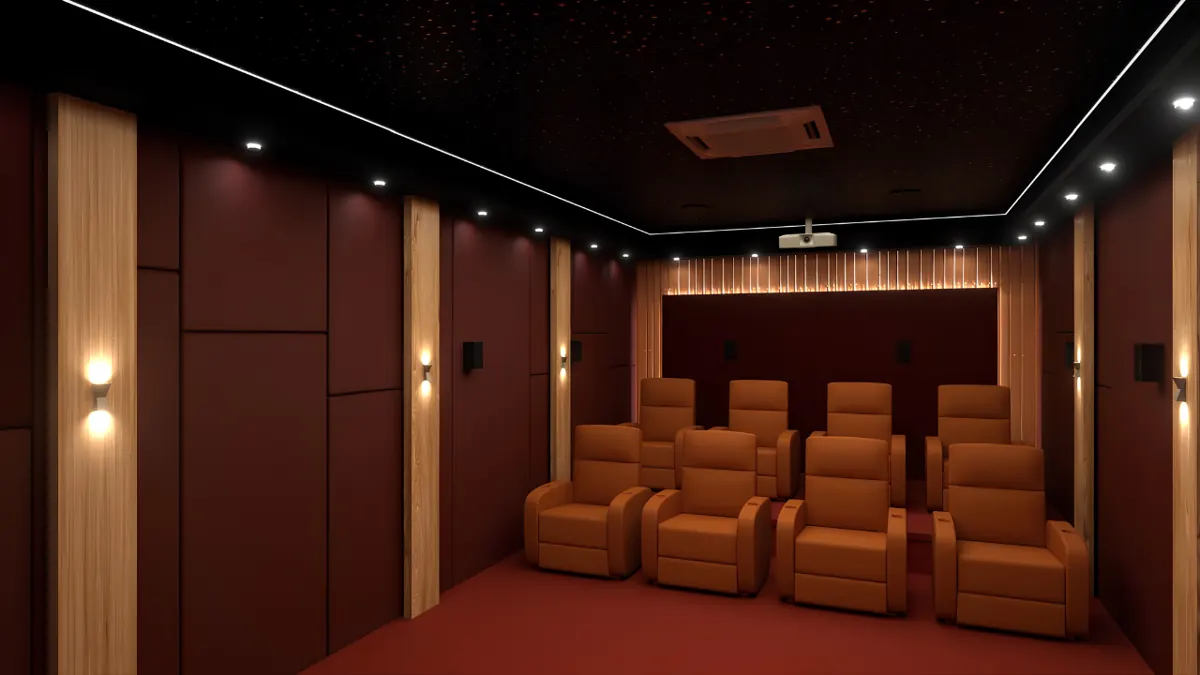
Doors and windows are the weak points. Use solid doors with seals and consider a sound lock (double door) for dedicated rooms. Air-conditioning ducts can carry sound out and noise in, so plan quiet, lined ducts and keep the indoor unit away from the seating area. Ventilation matters too, since closed rooms and equipment get warm.
Flooring and ceiling
Thick carpet with underlay absorbs sound and reduces impact noise. A false ceiling with acoustic infill helps both inside sound and some isolation. Combine these with home interior planning so finishes are chosen once, correctly.
A simple acoustic plan for a typical room
A practical plan has four layers. First, treat the first reflection points on the side walls and ceiling with absorption panels. Second, treat the back wall with absorption or diffusion to prevent echo returning to the seats. Third, place bass traps in corners to tame low frequencies. Fourth, add thick carpet and soft furnishings. This approach controls most problems without turning the room into a dead, lifeless space. A little reflection keeps the sound natural.
Materials commonly used
- Acoustic absorption panels: mineral wool or foam core wrapped in fabric
- Diffusers: wooden or moulded panels that scatter sound
- Bass traps: thick absorbers placed in corners
- Heavy curtains: useful for windows and as a flexible absorber
- Acoustic ceiling infill: inside a false ceiling to improve absorption and isolation
Ask the provider to explain where each material is used, and why. A clear, simple explanation is a good sign.
Testing the room
Professionals can measure how a room responds using a microphone and software, and then adjust speaker positions, subwoofer settings and room correction. This is how problems like boomy bass or harsh treble are found and fixed. Even if you do not measure, a simple listening test with familiar music and movie scenes tells you a great deal. Play a scene with quiet dialogue, then one with heavy bass, and walk around the room to hear differences.
Courtesy and compliance in apartments
In housing societies, renovation timing and noise rules matter. Check your association's rules before starting, schedule noisy work in permitted hours and keep neighbours informed. After the theatre is complete, set sensible volume habits for late evenings. Good isolation reduces conflict, but good manners prevent it.
Myths about soundproofing
- Egg crates and foam on the wall make a room soundproof. They only reduce echo.
- Carpet alone blocks sound. It helps with impact noise and echo but not airborne bass.
- A solid door is enough. Gaps around the frame leak sound; seals and a heavy door together work.
- Bass can be controlled with thin panels. Low frequencies need thick absorbers and careful room design.
Budget priorities for acoustics
If your budget is limited, prioritise in this order: seal gaps and fit a solid door, add heavy curtains and thick carpet, add absorption at first reflection points, add corner bass traps, then consider structural isolation upgrades. This order delivers the most noticeable improvement per rupee, though a dedicated room in a shared building may need isolation earlier in the plan.
Do not skip testing
After installation, the system should be measured and tuned. Speaker distances, levels and bass adjustments make a big difference. Read how this fits into the whole process in our home theatre service guide, and contact us if you want an acoustic plan for your room.
Frequently asked questions
Do acoustic panels make a room soundproof?
No. Panels reduce echo inside the room. Soundproofing needs mass, sealing and decoupling.
Can I have a home theatre in a flat without disturbing neighbours?
Yes, with planning, proper isolation and sensible volume. Choose the room and speaker positions carefully.
Is the false ceiling important for acoustics?
Yes. It hides wiring and speakers and can include acoustic material that improves sound.
Will my AC affect the sound?
AC noise and ducts can affect both. Plan quiet equipment and duct routes early.
Keep reading
Home Theatre Room Size and Seating Layout Guide
Plan your home theatre room size and seating layout with simple rules for screen distance, row spacing, risers and aisle width, tailored for Bangalore homes.
Best Home Theatre Service in Bangalore: 9 Checks Before Hiring
Looking for the best home theatre service in Bangalore? Use this 9-point checklist on design, acoustics, equipment, seating, installation and after-sales support.
Dolby Atmos Home Theatre in Bangalore: Speaker Layouts
Planning a Dolby Atmos home theatre in Bangalore? Understand 5.1.2 and 7.1.4 speaker layouts, ceiling speaker placement, room needs and wiring before you build.