

A home theatre in Bangalore does not need a mansion. A well-planned room with the right screen, seating, sound and lighting can turn an ordinary spare room into a place you actually want to watch movies in. Here are the basics.
Step 1: Pick the room
Choose a room you can darken and keep quiet. Rectangular rooms generally suit better than square ones. A room away from street noise and with solid doors helps sound stay in and outside noise stay out.

Step 2: Screen or projector
A large TV is simple and bright. A projector gives a cinema-style picture on a big screen but needs a darker room and the right throw distance. Decide based on room size and how much you can control light.
Step 3: Seating that you will love
Recliners are a natural fit for a home theatre because they let you stretch out. Check that each seat has a clear view and that rows are staggered if you have more than one. Explore our recliner collection and read our recliner buying guide.

Step 4: Sound
Good sound matters as much as a good picture. A surround system placed correctly, plus soft furnishings such as curtains, rugs and upholstered seats, reduces echo. Plan cable routes early so wires are hidden in walls or ceilings.
Step 5: Lighting and ambience
Use dimmable lights and warm accents so you can go from bright to cinema in a moment. Avoid glare on the screen and consider blackout curtains. A small feature light or chandelier can add atmosphere outside movie time. See our chandelier guide.
Plan it with the rest of your home
A home theatre works best when it is designed with the room, wiring and furniture together. Our team handles home theatre planning alongside interiors and furniture so everything fits. Contact us for a consultation.
Acoustic basics without a big budget
Soft surfaces absorb sound. Heavy curtains, a thick rug, upholstered seating and bookshelves reduce echo. Seal gaps around doors and avoid placing speakers directly against walls without testing positions. Even simple changes can make dialogue clearer and bass tighter.
Plan the wiring and power early
Decide where the screen, projector, speakers and equipment will go before walls are painted or ceilings finished. Plan conduits for cables, enough sockets and ventilation for equipment. Doing this at the interior stage is much cheaper than retrofitting later.
Where to go deeper
This overview covers the basics. For details, see room size and seating layout, acoustics and soundproofing, projector vs TV, Dolby Atmos speaker layouts and recliner seating.
- Budgeting: home theatre cost in Bangalore
- Hiring: best home theatre service in Bangalore
- Process: design to installation
- Tailoring: customized home theatre service
- Pitfalls: mistakes to avoid
No spare room?
A living room can work too. Read living room and home theatre combos for layouts that serve both daily life and movie nights, then contact us to plan your space.
A starter checklist for your theatre project
- Choose the room and measure it, including ceiling height
- Decide display: projector with screen or large TV
- Plan seating rows, risers and aisles
- Choose a speaker layout and plan conduits
- Plan acoustics and sound isolation
- Plan lighting scenes and automation
- Set budget phases and get itemised quotes
Following this order avoids the common problem of buying equipment before the room is ready.
Realistic expectations for first-time builders
Good results come from planning, not just spending. A modest room with proper acoustics, comfortable seating and careful calibration often beats an expensive system in an untreated room. Allow time for design approval, and keep a small contingency for wiring and finishing surprises.
Frequently asked questions
How big should a home theatre room be?
It depends on the screen and seating. Even a modest room can work, if viewing distance and sound are planned properly.
Do I need a separate room?
No. A living room can double as a theatre with blackout curtains and good seating, though a dedicated room gives the best experience.
Do you provide home theatre setups?
Yes. Ask our team about home theatre planning along with furniture and interiors.
Keep reading
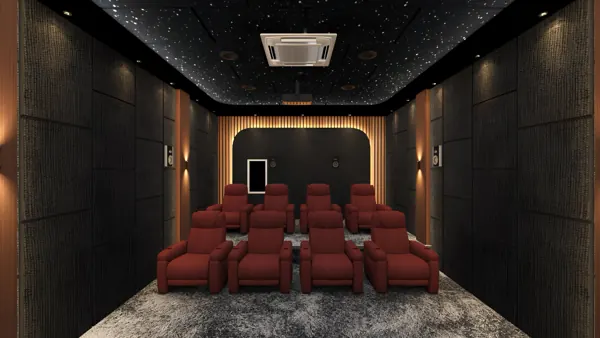
Best Home Theatre Service in Bangalore: 9 Checks Before Hiring
Looking for the best home theatre service in Bangalore? Use this 9-point checklist on design, acoustics, equipment, seating, installation and after-sales support.
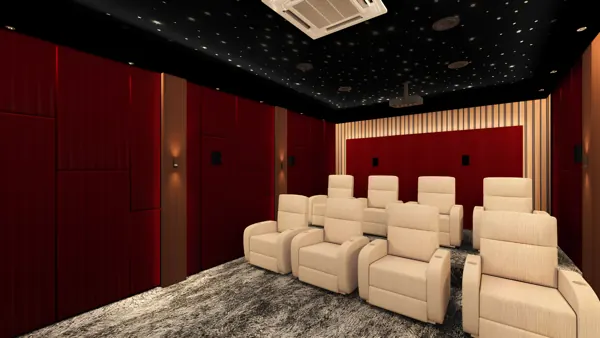
Customized Home Theatre Service in Bangalore: Design and Process
Explore customized home theatre service in Bangalore: tailored room design, acoustics, tiered recliners, starlit ceilings and lighting made for your space and budget.
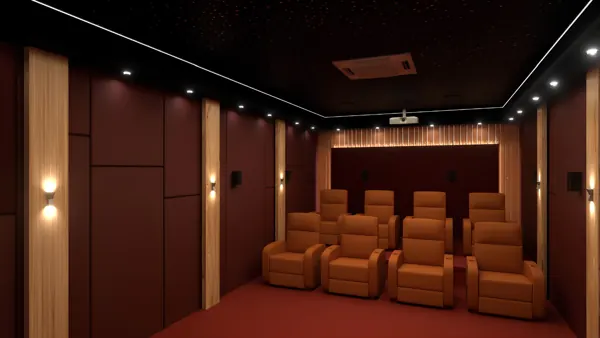
Home Theatre Room Size and Seating Layout Guide
Plan your home theatre room size and seating layout with simple rules for screen distance, row spacing, risers and aisle width, tailored for Bangalore homes.