
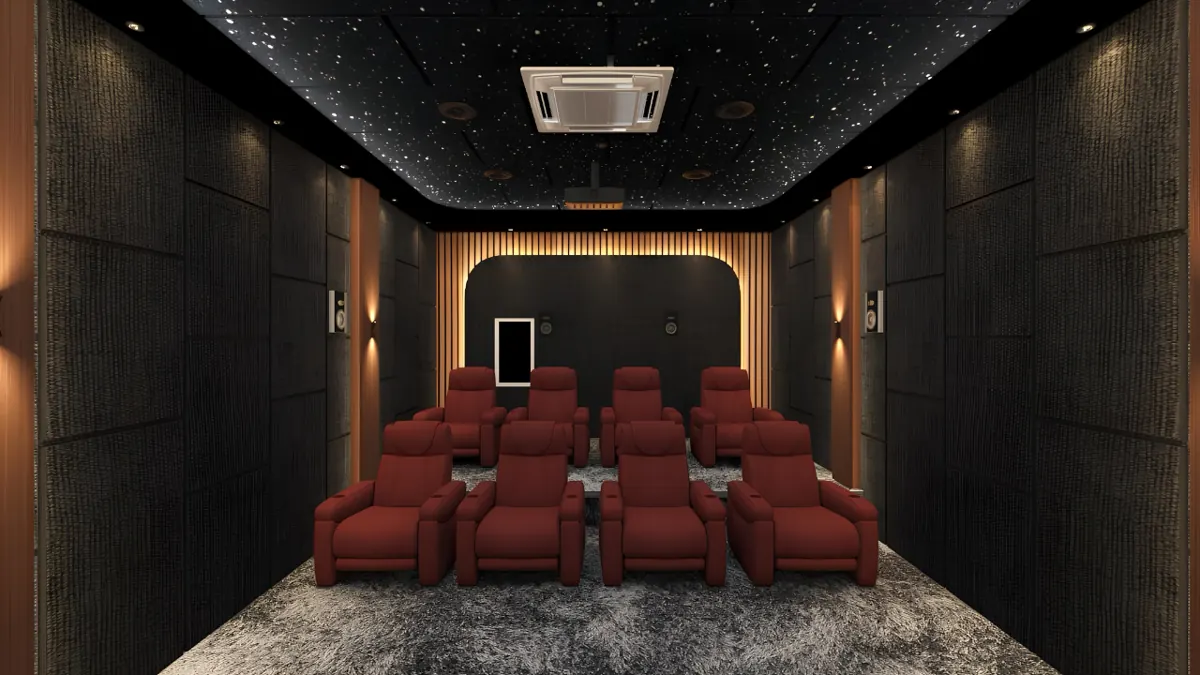
Most home theatre mistakes are not about equipment. They are planning errors that show up after the walls are painted. Avoid these ten and your theatre will look better, sound better and cost less to fix.
1. Buying equipment before designing the room
Equipment bought first often does not fit the room's size, acoustics or wiring plan. Design the room, then choose equipment for it. A proper design-led service works in this order.
2. Ignoring acoustics
Without absorption, even a premium system sounds harsh and echoey. Budget for panels, a treated ceiling and carpet. See our acoustics guide.
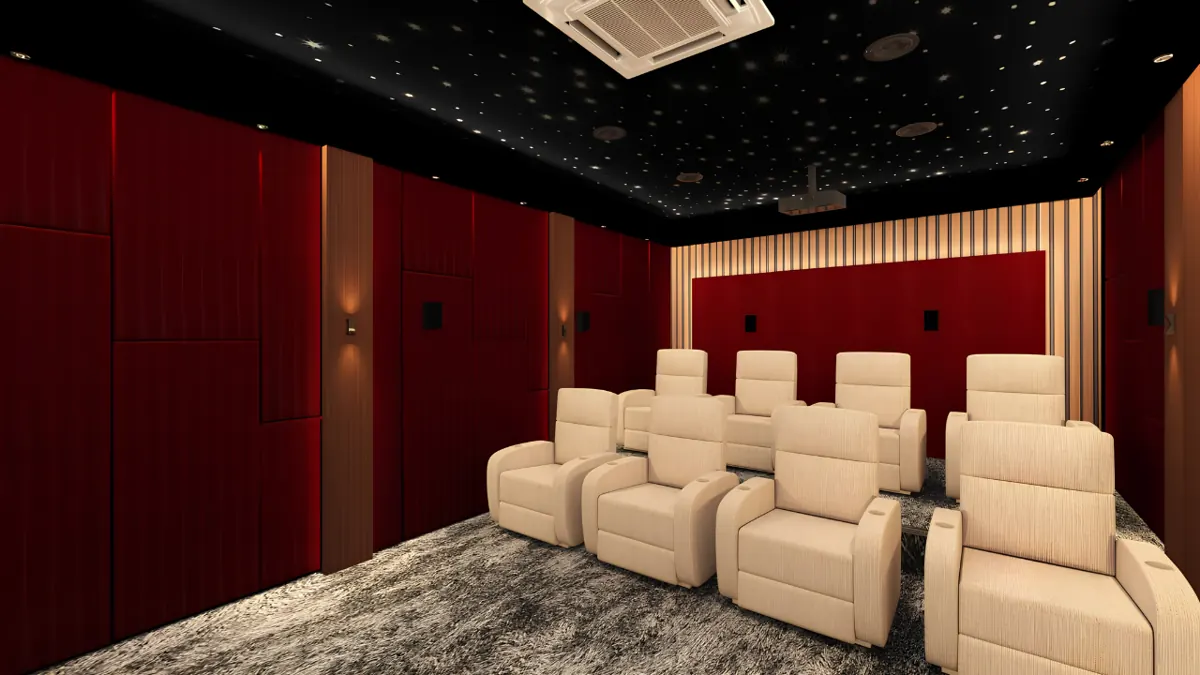
3. Confusing treatment with soundproofing
Panels do not stop sound leaving the room. If neighbours are close, plan isolation from the start, with heavy construction and sealed doors.
4. Skipping conduits and power planning
Retrofitting cables means cutting finished walls. Plan conduits for speakers, HDMI and power, and add a few spare runs for future upgrades.
5. Choosing a projector for a bright room
A projector needs a dark room. If you cannot control light, choose a TV. Compare the two in projector vs TV.
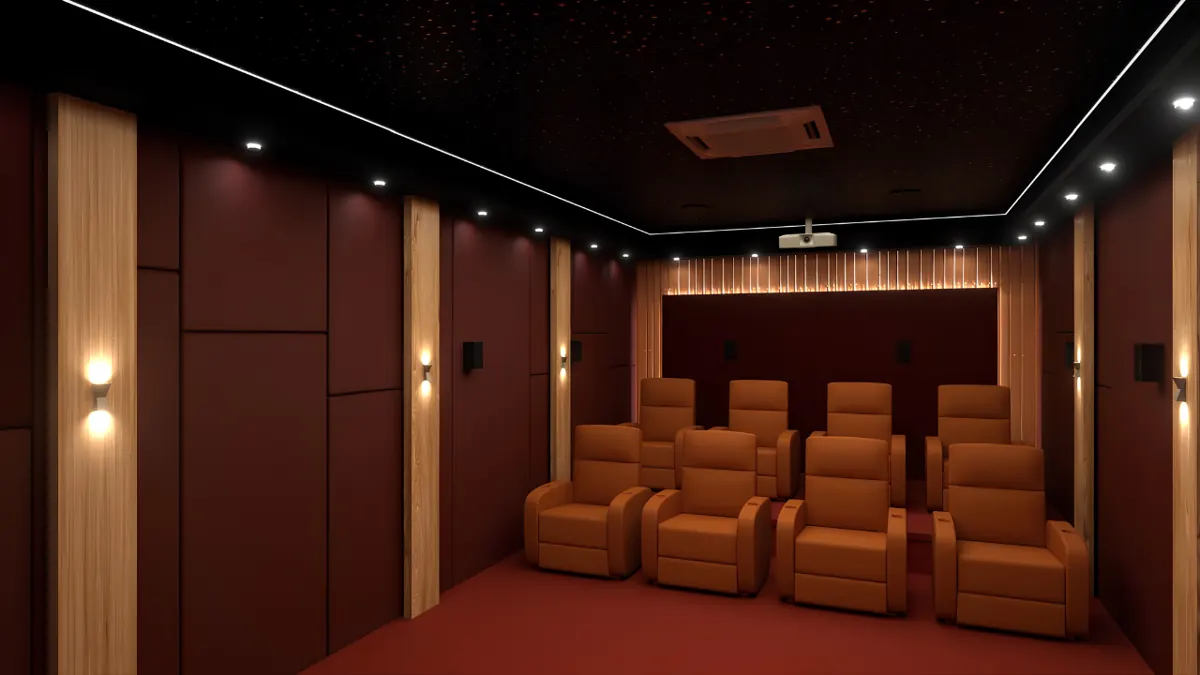
6. Cramming in too many seats
Overfilled rooms mean cramped recliners, blocked sightlines and poor sound. Plan seats using room size and layout rules and read the recliner guide.
7. Poor lighting control
Harsh overhead lights ruin the mood and cause screen glare. Use dimmable layered lighting: cove lights, wall washers, step lights and perhaps a starlit ceiling. A small decorative feature can add atmosphere outside movie time; our chandelier guide may help for adjoining spaces.
8. Forgetting ventilation and heat
Closed rooms with equipment racks and people warm up fast. Plan air-conditioning, airflow around the rack and a quiet duct design.
9. No calibration
Speakers and displays need setting up. Without calibration, bass can boom, dialogue can sound faint and the picture can look off. Always include calibration in the scope.
Mistake checklist before you sign off
- Layout and 3D design approved in writing
- Acoustic plan agreed
- Conduit and power plan checked against the seating plan
- Equipment model numbers match the quotation
- Ceiling height and riser plan confirmed
- Lighting scenes defined
- Calibration and warranty terms written down
Print this list and tick each item before you pay the next stage.
What to do if you have already made a mistake
Many problems can be improved without starting over. An echoey room can be improved with extra panels, curtains and a thicker carpet. Poor bass can be improved by moving the subwoofer and adding calibration. Glare can be reduced with better lighting control. Cramped seating can be fixed by removing one seat. The hardest to fix are hidden wiring and isolation, which is why they should be right from the start.
The cost of fixing late versus planning early
A cable run that costs very little during construction can cost many times more after the walls are painted. A ceiling that was not designed for speakers needs opening and repair. Acoustic panels added later may not blend with the design. Planning early costs time, not money, and the time is spent on drawings, not on demolition.
How to brief a designer to avoid mistakes
Write a one-page brief with room dimensions, number of regular viewers, budget range, preferred display type, sound ambitions, finishes you like and any constraints such as neighbours or timing. Add photos of rooms that inspire you. A clear brief helps designers recommend sensible solutions and prevents costly misunderstandings.
After-installation tests you should do
- Play dialogue-heavy scenes at low volume to check clarity
- Play a bass-heavy scene and walk around the room to check evenness
- Check every speaker with test tones
- Try each seat for view and comfort
- Test all lighting scenes and remotes
- Run the system for an hour to check heat and noise
10. Hiring on price alone
The cheapest quote often leaves out acoustics, design or support. Compare scope line by line using our home theatre cost guide and our checklist for choosing the best home theatre service.
Ready to plan your theatre without these mistakes? Explore our home theatre solutions or get in touch.
Frequently asked questions
What is the most common home theatre mistake?
Skipping acoustic treatment and wiring plans. Both are hard and expensive to fix after finishing.
Can mistakes be fixed after installation?
Many can, but at a cost. Acoustic panels and lighting are easier; hidden wiring and isolation are not.
Is a dedicated room necessary?
No, but a dedicated room gives the best results because light, sound and layout can be controlled.
Who can help me plan a theatre?
Our team can design and coordinate the theatre with seating and interiors. Contact us.
Keep reading
Best Home Theatre Service in Bangalore: 9 Checks Before Hiring
Looking for the best home theatre service in Bangalore? Use this 9-point checklist on design, acoustics, equipment, seating, installation and after-sales support.
Home Theatre Cost in Bangalore: Price Drivers and Budget
How much does a home theatre cost in Bangalore? Learn what drives the price - room work, acoustics, display, sound, seating - and how to plan a smart budget.
Customized Home Theatre Service in Bangalore: Design and Process
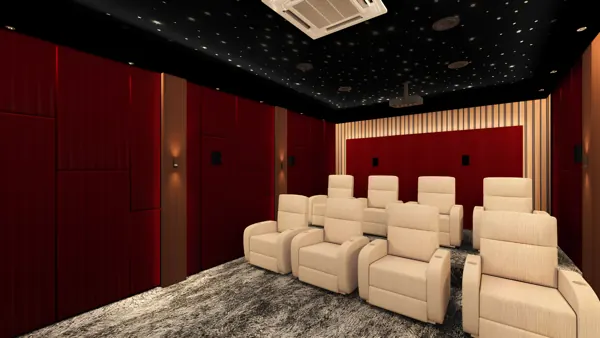
Customized home theatre service in Bangalore: room design, acoustics, tiered recliners, starlit ceilings and lighting made for your space and budget.