
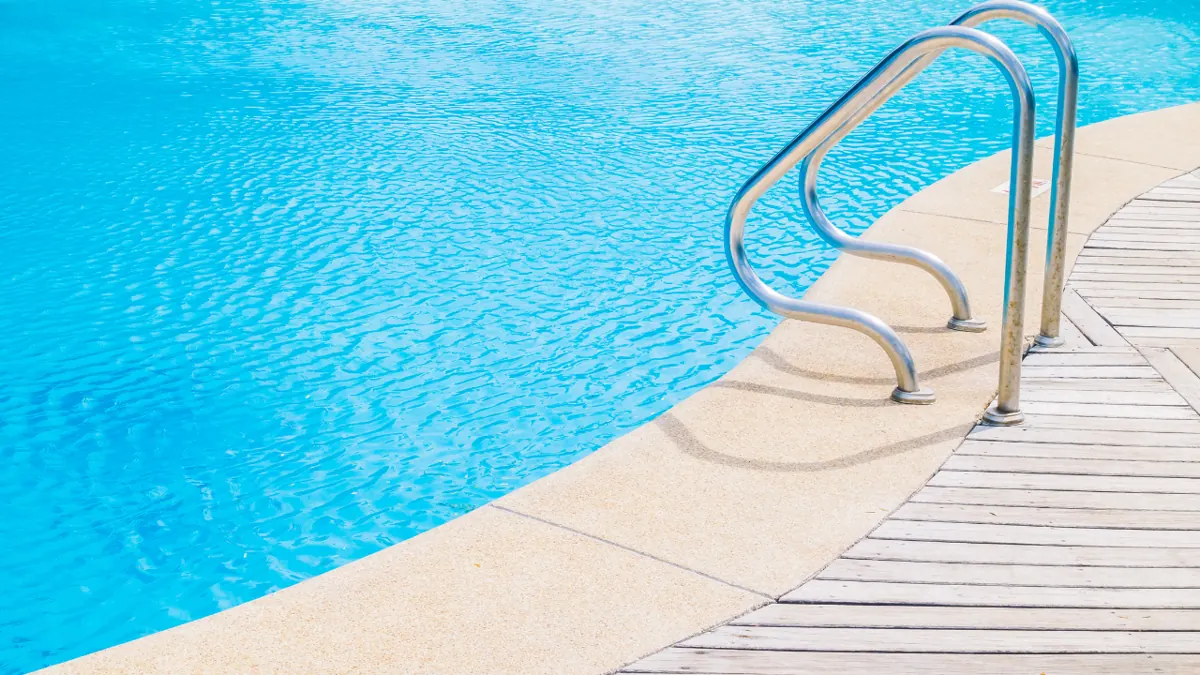
Good swimming pool maintenance in Bangalore is a routine, not a rescue. A little attention each day prevents green water, cloudy water and costly repairs. Use this checklist, or hand it to your pool caretaker or service team.
Daily tasks (5 to 10 minutes)
- Skim leaves and debris from the surface
- Empty skimmer and pump baskets if full
- Check the water level is at the skimmer mid-point
- Look at water clarity and smell
- Run the pump for the planned hours
Weekly tasks
- Brush walls, steps and corners to stop algae forming
- Vacuum the pool floor
- Test water: pH, free chlorine and alkalinity
- Adjust chemicals as needed, one at a time
- Backwash or clean the filter when pressure rises
- Check lights, rails and ladders
Typical target ranges are pH around 7.2 to 7.6 and free chlorine around 1 to 3 ppm, but follow your pool equipment or chemical supplier's guidance for your system.
Monthly tasks
- Test total alkalinity, calcium hardness and stabiliser
- Inspect pump, filter and valves for leaks or noise
- Clean tile line to remove scum
- Check the safety fence, gate and covers
- Review chemical stock
Monsoon and winter care
Heavy rain adds leaves, dirt and dilutes chemistry. Keep the pool covered during storms where possible, skim more often and test water after rain. Cooler weather slows chemical action, but algae can still appear. Do not shut the system down entirely; run the pump for enough hours to keep water circulating.
Water saving in Bangalore
Water is precious in the city. Use a cover to cut evaporation, fix leaks early, avoid over-backwashing and reuse backwash water for gardens where chemically suitable. Our filtration guide explains how efficient filtration also reduces water waste.

Common problems and quick fixes
- Green water: usually low chlorine or poor circulation. Test, shock-treat and brush
- Cloudy water: check filter, pH and circulation time
- Foam or scum: clean the waterline and review chemicals
- Strong chlorine smell: often combined chlorine, not too much chlorine. Test and shock-treat
- Scale on tiles: check calcium hardness and pH
When to call a professional
Call a service team for persistent algae, pump or heater faults, leaks, repeated cloudiness or if you travel often. A regular service contract is cheaper than emergency treatment. See what a complete swimming pool service covers.
A simple weekly schedule you can follow
- Monday: skim, brush, test water and adjust
- Wednesday: skim, empty baskets, check equipment
- Friday: skim, vacuum, check chlorine and pH
- Weekend: check water level, clean tile line, enjoy the pool
Adjust the schedule to usage. A heavily used pool needs more frequent testing.
What you need in your pool toolkit
- Telescopic pole, leaf skimmer net and brush
- Vacuum head and hose, or an automatic cleaner
- Reliable test kit or digital tester
- Chemicals: sanitiser, pH adjusters, shock treatment
- Gloves, goggles and a labelled storage box
- Spare cartridge or filter parts if your system uses them
Reading your filter and pump
A rising pressure gauge on a sand filter means it is time to backwash. A sudden pressure drop can indicate a blockage upstream or a pump problem. Unusual pump noise, bubbles in the strainer basket or leaks around seals need attention. Learn what normal looks like for your system, so you spot changes early.
Getting a service contract right
If you hire a service team, agree the visit frequency, the tasks included, chemical supply, reporting and emergency response. Ask them to log test results at each visit. A good contract keeps water consistent and gives you a record to refer to if problems arise.
Pre-party and post-party pool care
Before guests arrive, skim, brush and test the water, and adjust chemicals a day ahead so they settle. After a party, remove debris quickly, check chemistry, shock treat if heavily used and run the pump longer. Heavy use adds sweat, oils, sunscreen and organic matter, which consume chlorine rapidly.
Preparing the pool when you travel
- Balance chemistry before you leave
- Clean the filter and baskets
- Set pump timers for adequate circulation
- Fit a cover if you use one
- Arrange for a caretaker or service visit during long absences
- Check that automatic top-up works, if installed
Safety during maintenance
Store chemicals in a cool, dry, ventilated place, never mix them, wear gloves and eye protection and keep children away. Read our pool safety guide for more. For help with your pool, visit our swimming pool solutions or contact us.
Frequently asked questions
How often should I run the pool pump?
Many home pools need several hours daily, enough to turn over the whole volume at least once. Follow your equipment guidance.
Can I swim right after adding chemicals?
Wait until levels return to a safe range and the chemicals have dispersed, as advised on the product label.
How do I stop algae?
Keep chlorine in range, brush weekly, run the filter and keep pH balanced.
Is a service contract worth it?
For busy households, yes. It keeps the water consistently safe.
Keep reading
Pool Filtration and Water Treatment: Sand, Chlorine, Salt
Understand swimming pool filtration and water treatment: sand and cartridge filters, pump sizing, chlorine, salt systems, pH balance and tips for Bangalore pools.
Swimming Pool Service in Bangalore: Complete Guide
Swimming pool service in Bangalore explained: design, construction, filtration, finishes, safety and maintenance for homes and villas.
Swimming Pool Safety for Families: Fencing, Covers, Rules
Keep your family safe around a home swimming pool in Bangalore: fencing, covers, alarms, non-slip surfaces, supervision rules and chemical storage tips.