
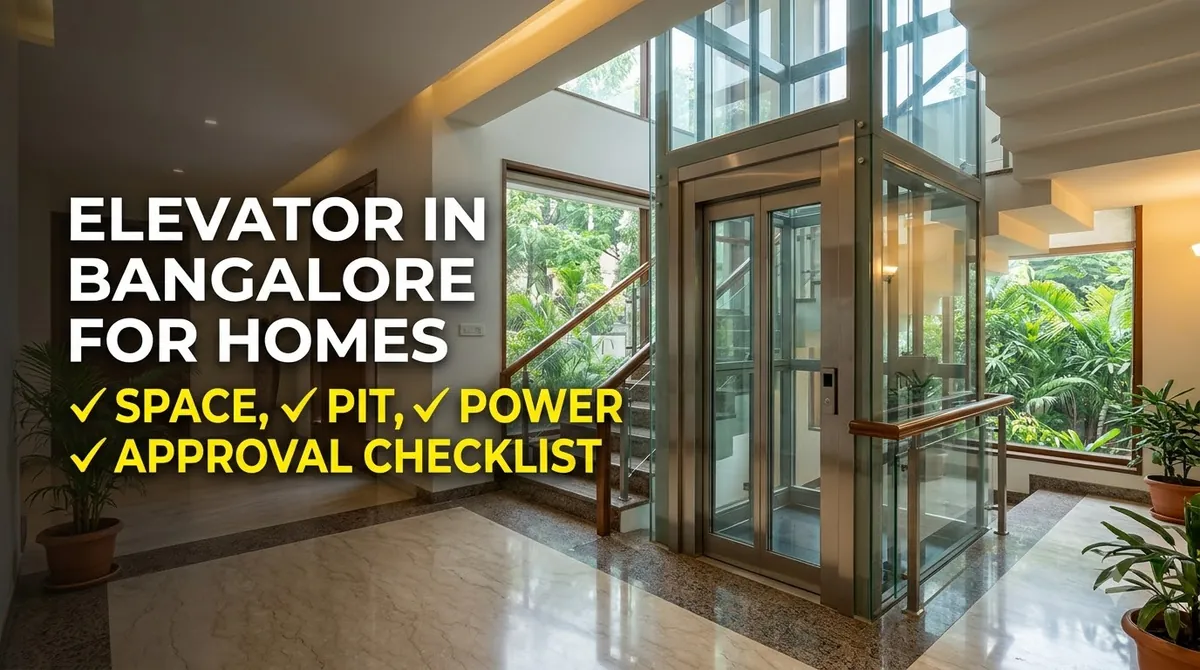
A home elevator adds comfort for elders, convenience for families and value to a villa. Before you book one, work through this elevator in Bangalore checklist covering space, pit, power and approvals.
Why plan before you buy
An elevator is a structural and electrical addition, not a piece of furniture. Space, load path, power and safety rules all affect which model fits. Planning early avoids expensive changes after construction.
Space: shaft size and location
Decide the number of floors, the car size you need (for people, a wheelchair or a stretcher) and where the shaft will sit. Common positions are beside the staircase, in a stairwell void or at an outer wall with a glass or panoramic finish. The shaft must be straight, plumb and sized for the chosen car.
Pit and overhead
Traditional elevators need a pit below the lowest floor and clearance above the top floor for the car and mechanism. Some compact home lifts reduce these requirements. Confirm the pit depth and overhead height for the exact model with the supplier before finalising civil work.
Power supply and backup
Check the electrical load and supply type needed, and plan a dedicated circuit and earthing. Power cuts are common enough that a backup option or battery-assisted lowering feature is worth considering so passengers are never stranded.
Drive types
Different drive systems suit different homes: hydraulic, traction, machine-room-less and vacuum or pneumatic designs each have trade-offs in space, noise, energy use and maintenance. Compare them against your building rather than choosing on looks alone.
Safety features to insist on
- Emergency lowering or rescue device
- Door interlocks and sensors
- Emergency alarm and intercom or call
- Overload protection
- Non-slip flooring and good lighting
Approvals and regulations
Lifts are regulated, and installations typically need compliance with applicable Karnataka rules, inspection and, where relevant, society or building approvals. Ask your supplier what documents and inspections apply to your building type, and keep the paperwork for your records.
Design and finish
Cars can be fitted with glass, wood or metal finishes to match your interior. Panoramic glass shafts become a design feature in villas. Consider lighting, flooring and handrails for comfort and accessibility.
Maintenance and service
Elevators need regular servicing for safety and reliability. Ask about the maintenance plan, response time and spare parts availability before buying. Service quality matters as much as the product.
Retrofit vs new construction
Adding a lift to an existing home is possible but needs a structural study of where a shaft can go. New construction lets you plan the shaft from the start, which is simpler and often more economical. Read home lifts for villas in Bangalore for more on both.
Speak to our lift team
Explore our home lift solutions or contact us with your floor plan, and we will recommend a suitable option and next steps.
Frequently asked questions
Can I install an elevator in an existing home?
Often yes, subject to a structural study and a suitable shaft location. Your supplier can assess feasibility.
Do home lifts need a pit?
Some models do and some need very little. Confirm the requirement for the chosen model.
What happens during a power cut?
Look for models with backup or battery-assisted lowering so passengers can exit safely.
Are approvals required?
Lifts are regulated, so confirm which inspections and permissions apply to your building.